Enjoying Music Again with Qobuz
Using Spotify was like wearing the wrong presciption eye glasses and not realizing how much better you could be seeing the world for over a decade Sure I could see decent enough and get around fine, but when I tried Qobuz it was like getting the perfect prescription— my mind was blown as to how many details and nuances were being lost in my listening experience all these years.

Welp, no Spotify Wrapped for me this year as I've been off of Spotify Premium for over two months now and honestly, I don't need a reminder of how much my kids have taken over my phone with KPOP Demon Hunters and Taylor Swift.
After over a decade of paying for Spotify Premium, I have left the platform for Qobuz. Yes, I have to keep looking at how to spell the name and I"m not even sure how to pronounce it properly but, I have to say, I AM DIGGING IT SO FAR!
For awhile I was on the fence about leaving Spotify as there were other platforms like Bandcamp and TIDAL offering higher audio quality and better payouts to the labels which, in turn, results in better pay for the artists. What really made the decision easy though was that Spotify’s free version has been playing ICE recruitment ads. There is no reason my money should support this government agency when instead it could be better spent supporting artists while I get a superior music listening experience in return!
What is Qobuz?
Qobuz serves as a streaming platform, download store, and editorial and was founded in 2007. Their focus is delivering the highest quality audio to their audience to “experience artist-approved sound”. As of now it’s predominantly music— they don’t offer audiobooks and they only have a couple music-centric podcasts.
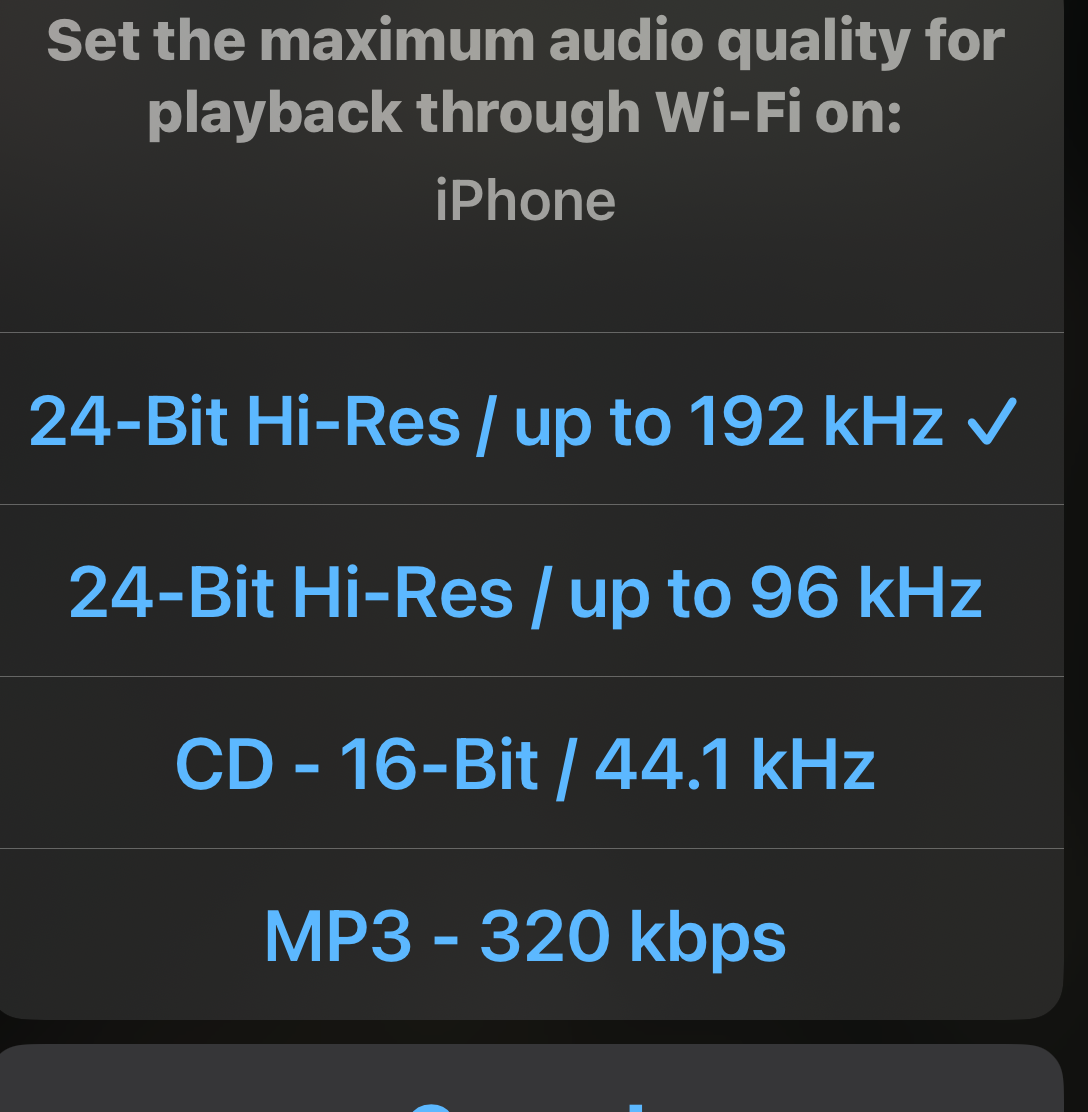
There is no free version of Qobuz however they offer a free one month trial. The basic streaming plan, “Studio Solo”, starts as low as $10.83/month which includes Lossless, FLAC 24-bit (up to 192 kHz) for streaming and downloads. For those who don’t know what that means, that is nerd-speak for extremely high-quality music files. I am subscribed to the Solo Studio plan and I am paying $16.99 after my free month trial expires. I am paying maybe a dollar more for Qobuz than Spotify.
I signed up via the App Store too which I believe is why it is more expensive than signing up directly from their site. Note to self…email their customer support and see if I can lower my rate.
What I’m Loving
Look, leaving something like a music streaming app you've been using for a decade can feel daunting. Will I lose my playlists? Will they have my favorite artists? Let’s go over the pros that immediately made me feel comfortable leaving Spotify.
Playlist Migration Tools
All of the time spent making playlists on Spotify over the years isn’t lost if you change to Qobuz.
Qobuz has a free 3rd party integration with Soundiiz which offers playlist migration tools. Simply link your accounts and transfer all your playlists from Spotify to Qobuz with just a few clicks.
Another cool import feature is you can convert a Spotify playlist link using Chosic.com to a CSV file and import the CSV playlist into your Qobuz account from Soundiiz. It may sound complicated but it’s a somewhat straightforward process which can allow you to import any of your friends’ playlists.
And just to highlight a related playlist feature, Qobuz does have collaborative playlists so you keep building playlists together with friends similar to Spotify!
CATALOG
One very reassuring thing that made leaving Spotify feel less strange was that Qobuz has the same exact catalog as Spotify. This immediately made me feel like I could do this, I could leave Spotify.
They had everything I love from Jesse Welles to Warren Zevon, Wu-Tang Clan to MF DOOM.
Qobuz also has King Gizzard and The Wizard Lizard who famously left Spotify this year— I was really digging their latest album Phantom Island right when they removed their catalog so I’m glad I can now listen to it again!
I was talking to one of my friends, trying to convince him to try Qobuz. My friend is into very obscure UK hip-hop.
He reeled off about 3 extremely niche British hip hop artists so I picked up my phone and opened the app and what do you know, they were all there!
Audio Quality
Audio quality is literally at the center of their being.
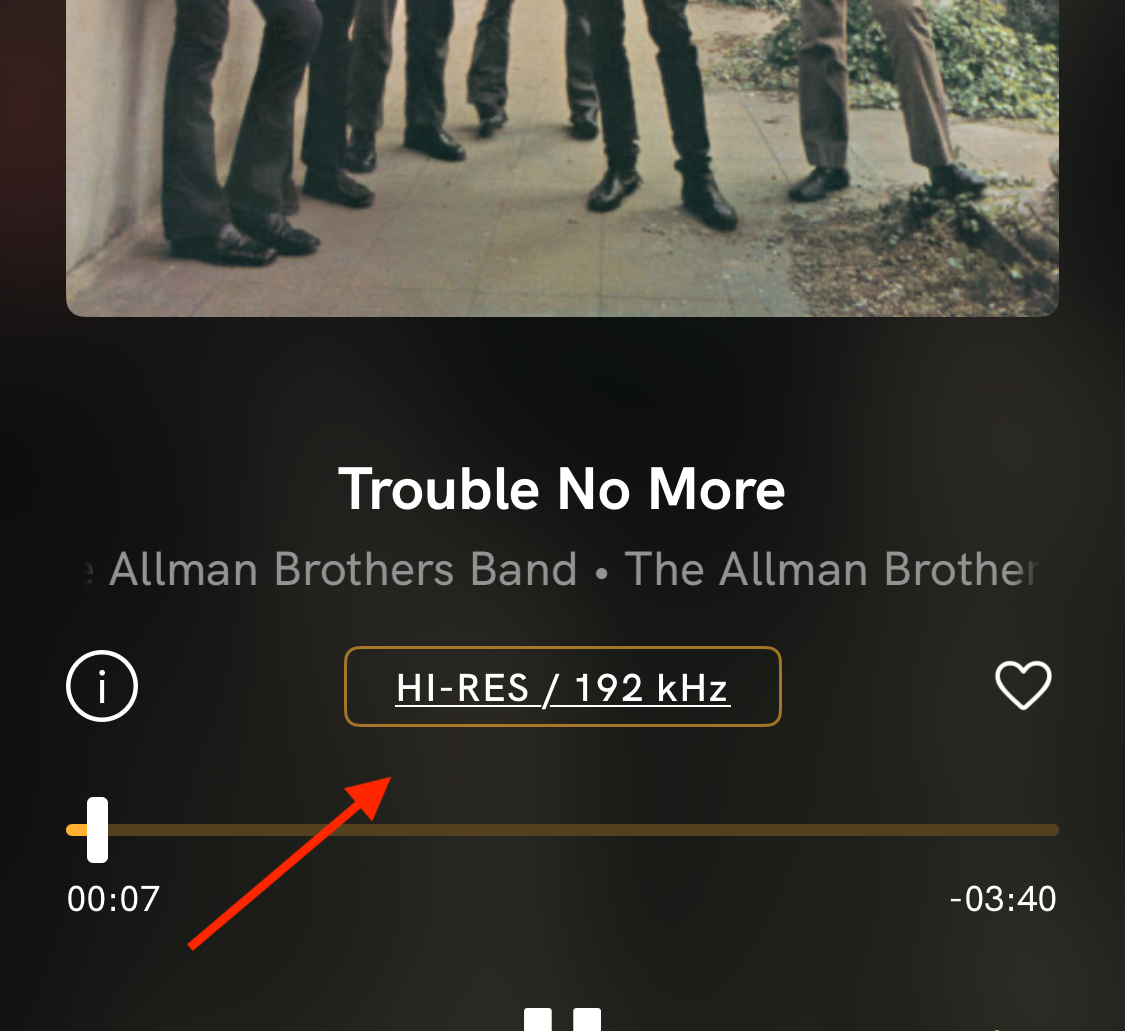
While Spotify has been dragging their feet on adding lossless audio, Qobuz offers multiple quality options for streaming and download. When CDs and vinyl were the format, it really came down more to quality of your sound system as the physical media was standardized in terms of quality. Now in the age of streaming, the media is variable and the platform you choose to deliver the content matters! You can now listen to music the way the artists have intended it to sound to audiences— no more compressed tiny audio where the drums and backup singers get mushed together.
My daughter and I did a blind “taste” test and listened to some of Taylor Swift’s new album Life of a Showgirl and Qobuz delivered, without a doubt a far superior output. Even my 8 year old could hear the difference.
I had gotten so accustomed to Spotify’s audio quality so I am excited to re-experience the music I love using this platform with its far more robust lossless delivery— you can really hear the instruments separately.
Using Spotify was like wearing the wrong prescription eye glasses and not realizing how much better you could be seeing the world for over a decade Sure I could see decent enough and get around fine, but when I tried Qobuz it was like getting the perfect prescription— my mind was blown as to how many details and nuances were being lost in my listening experience all these years.
Qobuz’s slogan is “Rediscover Music” and it really is true. While I can find tons of new artists I’ve never heard of (likely because of a less corporate-leaning algorithm), I LOVE relistening to my favorite albums. It really feels as though I am rediscovering some of my favorites as the high quality audio is just that enjoyable.
Support the Artists
Labels, and in turn artists, are notoriously underpaid via Spotify. As of 2024, it was known that Spotify pays artists an average of $0.003-$0.005 per stream whereas Qobuz pays the labels and publishers almost $0.019 per stream. Depending on the royalty agreement, Qobuz is paying somewhere between 275-525% more per stream!
I won’t get into the complexities of the music business and royalty payouts but it feels great knowing that artists are getting paid much better via Qobuz while I’m getting a much better user experience— a clear win-win.
Using the lower end of the Spotify payout model, the math shows that playing a song once on Qobuz is like playing a song almost seven times on Spotify in terms of royalty payout.
To major artists earning millions of dollars, this may not seem like much, but Qobuz is a major win for the smaller musicians and artists trying to pay their bills with their creativity.
Areas for Improvement
Honestly these are minor gripes as I bet these things will improve with time…
Search
Searching for songs and artists is a bit finicky as Qobuz requires users to be exact and complete in their search queries compared with Spotify. For example, if I type out “Ruby Tues” looking for the Rolling Stones’ “Ruby Tuesday” I won’t immediately be met with the desired result. Until I complete the entire title of the song, I then land on what I was searching for. My guess is they are putting their computing power towards delivering that Hi-Res audio quality. I bet this will improve with time.
Also, the app does not display song lyrics like Spotify does. This was a bummer to my daughter as she loved to read along with the lyrics as the song played. The reason I miss this feature is because on Spotify one could locate a song based on a lyric so if you didn’t know a song’s name but just a few lyrics, Spotify would be able to find the song based on lyric search which was a great feature.
I actually learned that including synced lyrics is a separate royalty payment to the song’s writers so perhaps this too is a feature Qobuz will see in the future.
File Size
One trade-off on getting amazing audio quality is that the file sizes are massive. If you have limited space on your phone and you like to download songs for offline listening, this will eat up your storage, which may be a concern for some.
Also for those with a limited data plan, streaming Qobuz on cellular data will eat up your data faster than Pac-Man at an all-you-can-eat buffet. You can, of course, always downshift the streaming quality from Hi-Res audio to either MP3 or CD Quality when you aren’t on WiFi.
Accessibility and UI
As a person with vision issues, I highly recommend using the app in Dark mode as the text is rather small by default. Also I may suggest, for any visually impaired people, to explore the app’s visual customization options within your smartphone’s accessibility settings as I found it beneficial to enlarge the text and increase the contrast.
The UI (user interface) also doesn’t feel as fun perhaps as Spotify does…at least according to my daughter but hey, I’m paying to listen not look.
Give it a try!
I very much recommend you give Qobuz a shot with their free 1-month trial. What do you have to lose? And hey, they do have KPop Demon Hunters so there is that too ;)